
Best Ras el Hanout Substitute: 7 Easy Alternatives
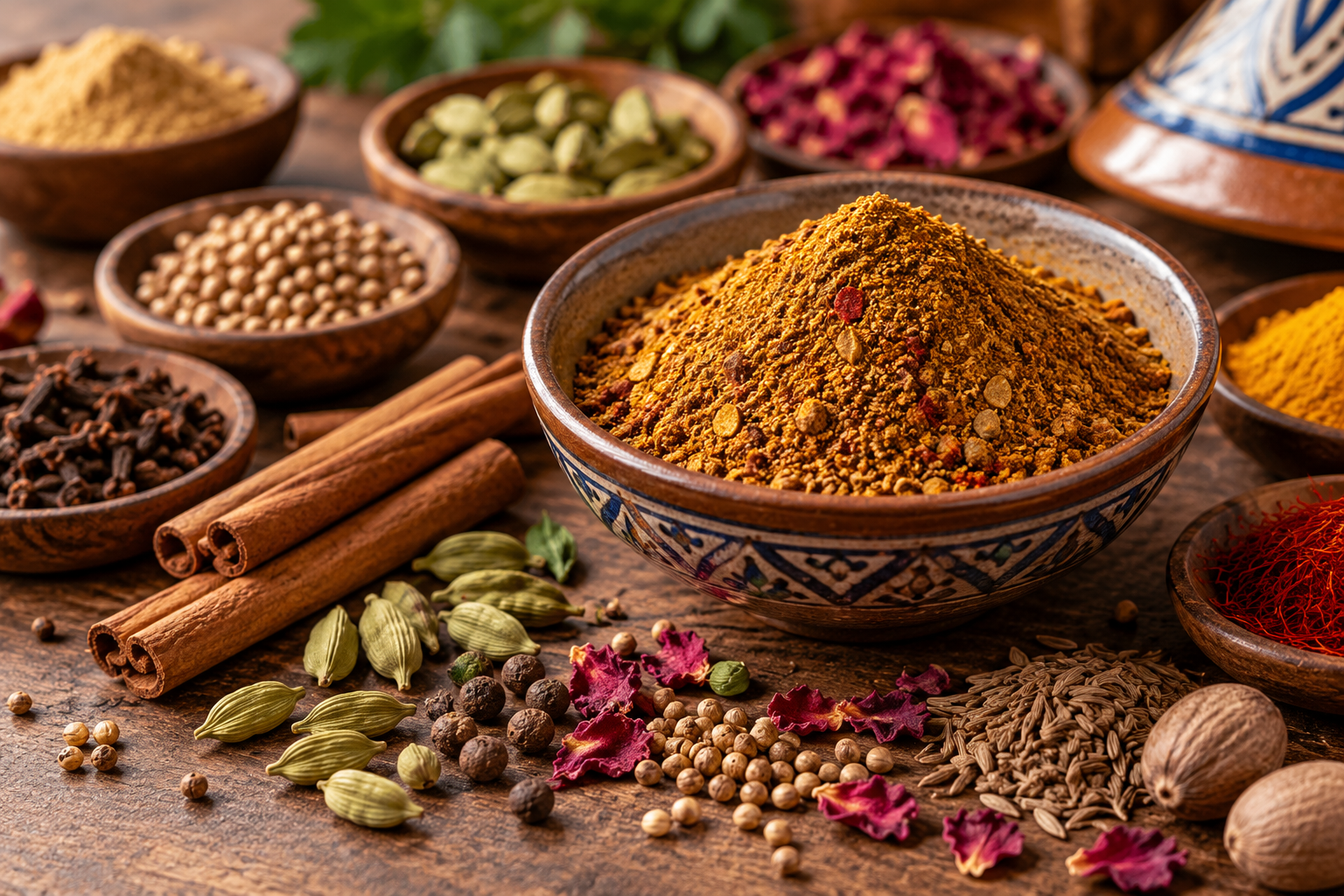
Out of ras el hanout halfway through a recipe? You probably already have a workable substitute in your pantry.
Because ras el hanout is a complex North African spice blend rather than one fixed recipe, there is no single perfect replacement. The best option depends on what you’re cooking and which spices you have available.
For most recipes, garam masala is the easiest store-bought substitute. Baharat works especially well with meat, rice, and vegetables, while a homemade spice blend gives you the closest control over the final flavor.
Quick Answer
For 1 teaspoon of ras el hanout, start with:
| Substitute | Amount | Best For |
|---|---|---|
| Garam masala | 1 tsp | Curries, stews, roasted vegetables |
| Baharat | 1 tsp | Meat, rice, soups, vegetables |
| Homemade blend | 1 tsp | Almost any recipe |
| Curry powder | ¾–1 tsp | Stews, vegetables, chicken |
| Berbere | ½ tsp | Spicy stews and grilled meat |
| Pumpkin pie spice + cumin | ¾ tsp + ¼ tsp | Mild dishes, couscous, vegetables |
| Cumin + coriander + cinnamon | ½ + ¼ + ¼ tsp | Simple savory recipes |
Closest overall: homemade blend
Easiest store-bought swap: garam masala
Best for meat: baharat
Best if you want more heat: berbere
If you have several individual spices available, the homemade blend below is usually the best choice.
What Does Ras el Hanout Taste Like?
Ras el hanout is not one standardized recipe. It is associated with North African cooking, especially Moroccan cuisine, and different spice sellers and households may use different combinations.
A typical blend can include spices such as:
- cumin
- coriander
- cinnamon
- ginger
- turmeric
- black pepper
- cardamom
- cloves
- nutmeg
- allspice
The overall flavor is usually warm, earthy, fragrant, slightly sweet, and gently peppery rather than intensely hot.
That is why a good substitute does not need to copy every ingredient. It simply needs to recreate the same balance of earthiness, warmth, sweetness, and aromatic complexity.
For more background, see our guide to ras el hanout.
1. Garam Masala — Best Overall Store-Bought Substitute
If you want the simplest answer, start with garam masala.
Both blends use warm, aromatic spices, and many garam masala blends contain ingredients such as cumin, coriander, cardamom, cinnamon, cloves, black pepper, and nutmeg.
That gives garam masala much of the same depth and warmth that ras el hanout brings to a dish.
How much should you use?
Use:
1 teaspoon garam masala for 1 teaspoon ras el hanout.
Taste before adding more.
Best uses
Garam masala works especially well with:
- lamb
- chicken
- roasted vegetables
- lentils
- rice
- soups
- stews
The main difference is that garam masala can taste more cardamom- or clove-forward, while ras el hanout may have a broader earthy, floral, or peppery character.
For a more detailed comparison, see our ras el hanout vs garam masala guide.
2. Baharat — Best for Savory Dishes
Baharat is another very good substitute, especially for meat, rice, vegetables, soups, and hearty stews.
The ingredients vary, but many baharat blends contain spices such as:
- black pepper
- cumin
- coriander
- cinnamon
- cloves
- cardamom
- nutmeg
- paprika
That gives it plenty of overlap with ras el hanout.
Substitution ratio
Use:
1 teaspoon baharat for 1 teaspoon ras el hanout.
If your baharat is especially peppery, start with slightly less and adjust to taste.
What changes?
Baharat is often more straightforwardly savory and peppery.
Ras el hanout can be more floral, sweet, or complex depending on the blend.
That difference is usually less noticeable in strongly flavored dishes such as grilled meat, rice dishes, and stews.
For a deeper comparison, read our Baharat vs Ras el Hanout guide.
3. Homemade Ras el Hanout Substitute
If you already have several ground spices, this is usually the best option.
You do not need 10 or 15 ingredients to make a useful substitute.
Combine:
- 2 tsp ground cumin
- 2 tsp ground coriander
- 1 tsp ground cinnamon
- 1 tsp ground ginger
- 1 tsp turmeric
- ½ tsp black pepper
- ½ tsp ground cardamom
- ¼ tsp ground cloves or nutmeg
Mix thoroughly and store the extra blend in an airtight container.
This makes roughly 8 teaspoons of spice blend.
Use it:
1:1 in place of ras el hanout.
For a smaller batch, simply halve each ingredient.
Don’t have every spice?
That is fine.
The most important components are:
Cumin and coriander for the earthy base.
Cinnamon for warmth and sweetness.
Ginger, pepper, cardamom, cloves, and nutmeg for extra aromatic complexity.
Missing one of the smaller ingredients will not ruin the blend.
This is not meant to reproduce one specific Moroccan ras el hanout recipe. It is a practical substitute designed to fill the same role in everyday cooking.
4. Curry Powder
Curry powder is not the closest match, but it can still work when your pantry options are limited.
Many curry powders contain cumin, coriander, turmeric, fenugreek, and other warm spices.
The main difference is that curry powder often has a stronger turmeric and fenugreek character and less of the sweet or floral complexity associated with ras el hanout.
How to substitute it
Start with:
¾ teaspoon curry powder for every 1 teaspoon ras el hanout.
Taste the dish and increase toward a 1:1 ratio if needed.
For a closer approximation, add a small pinch of cinnamon.
Best for
Curry powder works best in:
- chicken
- lentils
- chickpeas
- soups
- stews
- roasted vegetables
It is less suitable when ras el hanout is meant to be the defining flavor of the dish.
5. Berbere — Best If You Want More Heat
Berbere can work as a substitute, but there is one important difference:
it is usually much hotter than ras el hanout.
The Ethiopian spice blend commonly combines chili peppers with warming spices, which gives dishes both aromatic depth and noticeable heat.
Substitution ratio
Start with:
½ teaspoon berbere for 1 teaspoon ras el hanout.
You can always add more.
Best uses
Berbere works especially well with:
- beef
- lamb
- chicken
- lentils
- beans
- tomato-based stews
Avoid replacing ras el hanout 1:1 unless you already know your berbere is mild.
For more alternatives, see our berbere substitute guide.
6. Pumpkin Pie Spice + Cumin
This sounds unusual, but the combination makes sense once you look at the ingredients.
Pumpkin pie spice usually contains warming spices such as cinnamon, ginger, nutmeg, cloves, or allspice.
What it lacks is the earthy, savory base.
Cumin fills that gap.
How to use it
Combine:
¾ teaspoon pumpkin pie spice + ¼ teaspoon ground cumin
to replace:
1 teaspoon ras el hanout.
If you have ground coriander, add a small pinch.
Best uses
This works best in:
- couscous
- carrots
- squash
- sweet potatoes
- roasted root vegetables
- mild chicken dishes
It would not be my first choice for heavily seasoned lamb or beef because the sweet spices can become too prominent.
7. Cumin + Coriander + Cinnamon
If your spice cabinet is almost empty, you can still make a useful substitute from three common spices.
Combine:
½ teaspoon cumin + ¼ teaspoon coriander + ¼ teaspoon cinnamon
to replace approximately:
1 teaspoon ras el hanout.
Each spice has a specific role:
Cumin adds earthiness.
Coriander brings a lighter, slightly citrusy note.
Cinnamon adds warmth and gentle sweetness.
If you also have black pepper, ginger, cardamom, or nutmeg, add a very small pinch.
This will not taste as complex as a full ras el hanout blend, but it works surprisingly well in simple savory dishes.
Which Ras el Hanout Substitute Should You Choose?
The best substitute depends more on the dish than on finding one perfect replacement.
For lamb or beef
Choose:
- baharat
- homemade blend
For chicken
Choose:
- garam masala
- baharat
- homemade blend
For couscous
Choose:
- homemade blend
- cumin + coriander + cinnamon
For roasted vegetables
Choose:
- garam masala
- homemade blend
- pumpkin pie spice + cumin for sweeter vegetables such as carrots or squash
For stews
Choose:
- garam masala
- baharat
- berbere if extra heat fits the recipe
When ras el hanout is the main flavor
Use the homemade blend.
Curry powder and other strongly flavored alternatives work better when ras el hanout is only one part of a larger seasoning profile.
What Should You Avoid?
Some seasonings may look like possible substitutes but can push the dish in a very different direction.
Plain cumin
Cumin adds earthiness, but it lacks the aromatic complexity of a spice blend.
Cinnamon alone
Cinnamon is too sweet and one-dimensional to replace ras el hanout by itself.
Chili powder
American-style chili powder may contain cumin and other spices, but its flavor profile is usually quite different.
Five-spice powder
Five-spice can be dominated by star anise and other sweet aromatics, which can change the character of the dish substantially.
These options will not necessarily ruin a recipe, but they are weaker choices when better substitutes are available.
Final Takeaway
Running out of ras el hanout does not mean you need to abandon your recipe.
For the easiest replacement, use garam masala at a 1:1 ratio.
For meat, rice, and savory dishes, baharat is another strong choice.
If you have cumin, coriander, cinnamon, and a few additional warm spices, a homemade blend gives you the most control over the final flavor.
The goal is not to reproduce every ingredient in ras el hanout. It is to restore the combination of earthiness, warmth, sweetness, pepperiness, and aromatic complexity that the blend contributes to the dish.
Frequently Asked Questions
What is the best substitute for ras el hanout?
Garam masala is one of the easiest general-purpose substitutes and can usually be used at a 1:1 ratio. If you have several individual spices available, a homemade blend will give you more control over the final flavor.
Can I use curry powder instead of ras el hanout?
Yes. Start with about ¾ teaspoon curry powder for every 1 teaspoon ras el hanout. A small pinch of cinnamon can help make the flavor warmer and closer in character.
Is ras el hanout spicy?
Not necessarily. Some blends contain hot pepper, but ras el hanout is generally known more for aromatic complexity than intense heat.
Are ras el hanout and garam masala the same?
No. They come from different culinary traditions and are not interchangeable in every context. However, they can share enough warm, aromatic spices for garam masala to work as a practical substitute.
Can I make a ras el hanout substitute at home?
Yes. A blend of cumin, coriander, cinnamon, ginger, turmeric, black pepper, and other warm spices can make an effective homemade substitute.