
Poultry Seasoning vs Chicken Seasoning: What’s the Difference?
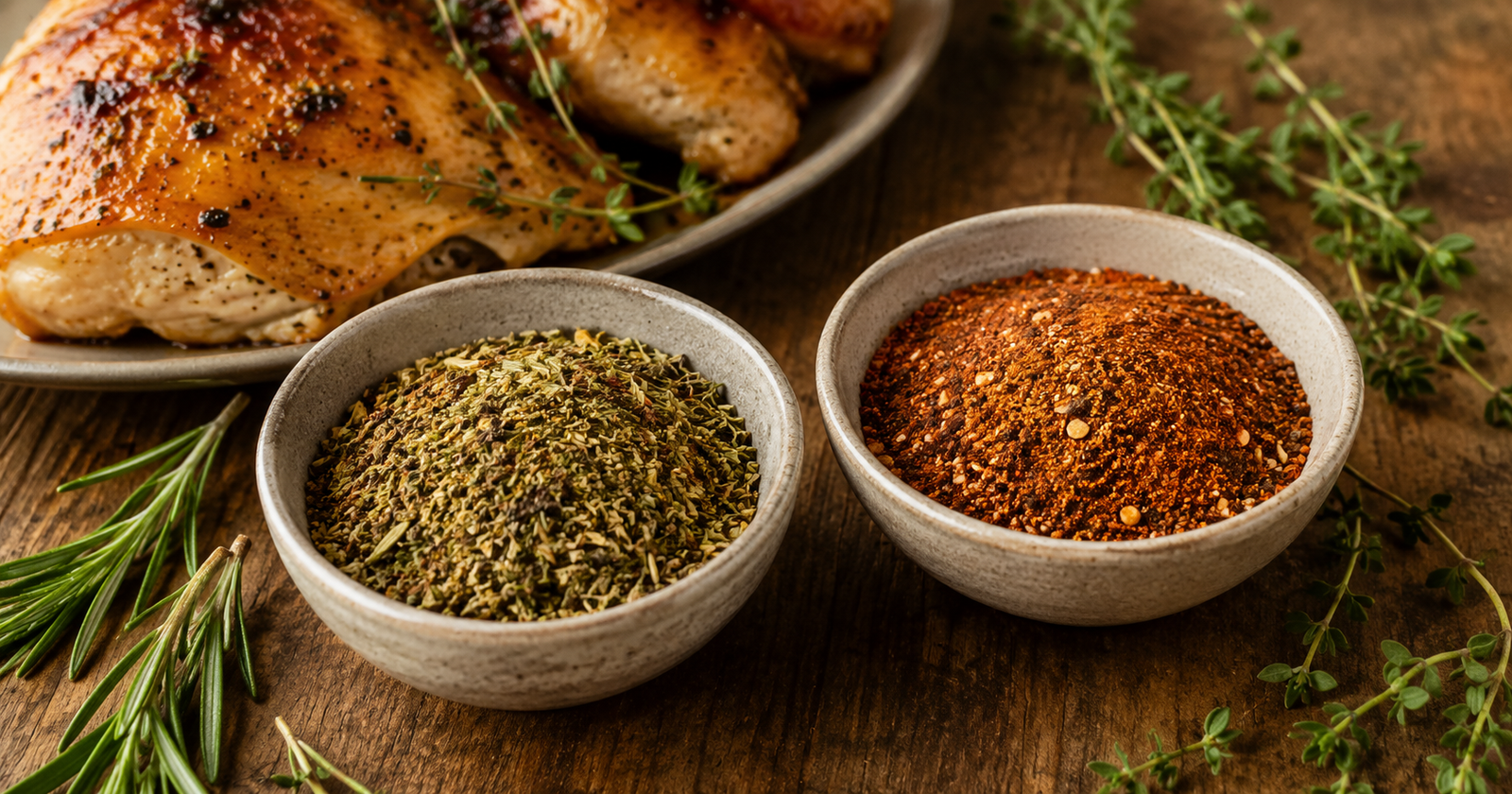
Quick answer: Poultry seasoning is usually an herb-forward blend based on ingredients such as sage, thyme, marjoram and rosemary. Chicken seasoning is a much broader category and may combine herbs with garlic, onion, paprika, pepper, salt, chile and other ingredients.
The important difference is that poultry seasoning has a fairly recognizable traditional herb profile, while “chicken seasoning” simply describes a blend formulated to taste good on chicken.
That means two jars labeled chicken seasoning can taste very different, while poultry seasoning blends tend to stay closer to the familiar sage-and-thyme flavor used with roast chicken, turkey, stuffing and gravy.
Poultry Seasoning vs Chicken Seasoning at a Glance
| Feature | Poultry Seasoning | Chicken Seasoning |
|---|---|---|
| Typical flavor | Herbal, savory, earthy | Savory, garlicky, peppery, smoky or spicy |
| Common ingredients | Sage, thyme, marjoram, rosemary, pepper, sometimes nutmeg | Garlic, onion, paprika, pepper, herbs, chile and sometimes salt |
| Salt | Often absent in classic herb blends, but check the label | Frequently included, but varies by product |
| Main purpose | Add traditional herb flavor to poultry and savory dishes | Provide a complete seasoning profile for chicken |
| Best uses | Roast chicken, turkey, stuffing, gravy, soups | Chicken breasts, thighs, wings, grilling, roasting |
| Flavor consistency | Relatively recognizable style | Can vary significantly by brand |
| Can they substitute? | Yes, with adjustments | Yes, depending on ingredients |
What Is Poultry Seasoning?
Poultry seasoning is a traditional blend of herbs and spices commonly associated with chicken and turkey.
There is no legally fixed recipe that every manufacturer must follow, but common ingredients include:
- Sage
- Thyme
- Marjoram
- Rosemary
- Black pepper
- Nutmeg
The overall profile is usually savory, earthy and herbal, with sage and thyme often doing much of the aromatic work.
A good real-world example is McCormick Poultry Seasoning. Its current ingredient list contains thyme, sage, marjoram, rosemary, black pepper and nutmeg. Salt is not included in that formula.
This is why classic poultry seasoning is useful when you want to control the salt separately from the herbs.
What Is Chicken Seasoning?
Chicken seasoning is much less standardized.
Instead of referring to one traditional recipe, the term generally means a seasoning blend designed for chicken.
Common ingredients can include:
- Paprika
- Garlic powder
- Onion powder
- Black pepper
- Thyme
- Rosemary
- Parsley
- Red pepper
- Salt
- Citrus ingredients
- Other herbs and spices
Paprika is especially common because it adds both flavor and color. If you want to understand the ingredient itself, see What Is Paprika Made From? Peppers & Process.
Garlic powder is another frequent component of chicken blends. Our guide Is Garlic a Spice or a Vegetable? explains why dried garlic is commonly treated as a spice or seasoning even though fresh garlic is a bulb vegetable.
Real Product Examples Show the Difference
Commercial products make the distinction easier to see.
McCormick Poultry Seasoning contains:
- Thyme
- Sage
- Marjoram
- Rosemary
- Black pepper
- Nutmeg
By contrast, McCormick Perfect Pinch Rotisserie Chicken Seasoning lists:
- Salt
- Onion
- Spices
- Paprika
- Garlic
- Citric acid
McCormick Grill Mates Montreal Chicken Seasoning is different again. Its current formula includes garlic, onion, salt, black pepper, parsley, red pepper, paprika and green bell pepper among its ingredients.
So “chicken seasoning” does not describe one specific flavor formula. One version can be paprika-heavy, another can emphasize garlic and herbs, and another may lean smoky, spicy or citrusy.
What Is the Main Flavor Difference?
The easiest way to remember the difference is:
Poultry seasoning is primarily an herb blend.
Chicken seasoning is usually a complete seasoning blend intended for chicken.
Poultry seasoning tends to give food a familiar roast-dinner aroma built around sage, thyme and similar herbs.
Chicken seasoning can go in many directions.
A paprika-heavy blend may taste warm and mildly sweet. A garlic-and-onion blend will be more savory. A grill seasoning may include pepper and chile, while a rotisserie-style seasoning may combine salt, onion, paprika and garlic.
Is Poultry Seasoning Only for Poultry?
No.
Despite the name, poultry seasoning can work in many savory foods.
Try it in:
- Stuffing
- Gravy
- Soups
- Roasted potatoes
- Beans
- Roasted vegetables
- Meatloaf
- Savory bread dishes
The herb combination works anywhere you want a traditional sage-and-thyme style flavor.
Can You Use Poultry Seasoning on Chicken?
Yes. Chicken is one of the most natural uses for poultry seasoning.
Roast chicken
Mix poultry seasoning with salt, black pepper and a small amount of oil, then rub it over the chicken before roasting.
Chicken thighs
The richer flavor of thighs works particularly well with herbs such as sage, thyme and rosemary.
Chicken soup
A small amount of poultry seasoning can provide several herb flavors without adding each herb separately.
Chicken and roasted vegetables
Mix the seasoning with oil and use it on chicken, potatoes, carrots or similar vegetables before roasting.
The main thing to check is whether your particular blend already contains salt.
Which Is Better for Chicken Breast?
For simple chicken breast, a general chicken seasoning is often the easiest option because it can provide salt, paprika, garlic, onion, pepper and herbs in a single blend.
Poultry seasoning also works well, but you may need to add salt, garlic or paprika separately.
For a complete chicken-specific guide, see Best Seasoning for Chicken Breast: Spices, Blends & Easy Ideas.
Can You Substitute Poultry Seasoning for Chicken Seasoning?
Usually, yes.
The result will normally taste more herbal than a typical all-purpose chicken blend.
If a recipe calls for chicken seasoning and you only have poultry seasoning, you can build around it.
Try:
- 1 teaspoon poultry seasoning
- 1/2 teaspoon paprika
- 1/4 teaspoon garlic powder
- Salt to taste
You can also add onion powder or black pepper if the dish needs more savory depth.
There is no requirement to copy a commercial chicken seasoning exactly. The goal is simply to replace the missing flavor components.
Can Chicken Seasoning Replace Poultry Seasoning?
Often, but the ingredient label matters.
If the chicken seasoning is mainly herbs, garlic and pepper, it may work easily.
A strongly smoky, spicy or salty blend will change the dish much more noticeably.
This matters especially in foods such as stuffing or traditional gravy, where sage and thyme are expected to dominate.
If your chicken seasoning contains salt, start with less than the recipe calls for and adjust after tasting.
Which Is Better for Roast Chicken?
Both can work.
Choose poultry seasoning when you want:
- Traditional herb flavor
- Sage and thyme notes
- A classic roast profile
- More control over salt
Choose chicken seasoning when you want:
- A convenient all-in-one blend
- Garlic and onion flavor
- More color from paprika
- Smoky, peppery or spicy variations
Neither is automatically better. They simply create different flavor profiles.
Which Is Better for Turkey?
Poultry seasoning is the more traditional option.
Its sage, thyme, rosemary and marjoram-style profile naturally suits roast turkey, stuffing and gravy.
Chicken seasoning can also work on turkey, but check the ingredients first. A strongly smoky or spicy blend will give the turkey a very different character.
Is Poultry Seasoning a Spice or a Seasoning?
Poultry seasoning is best described as a seasoning blend made from a combination of herbs and spices.
Sage, thyme, rosemary and marjoram are herbs because the flavorful parts normally come from the leaves. Black pepper and nutmeg are spices.
For a clearer explanation of the terminology, see Herbs vs Spices: What’s the Difference?.
A Simple Homemade Poultry Seasoning
You can make a small unsalted blend with:
- 2 teaspoons dried sage
- 2 teaspoons dried thyme
- 1 teaspoon dried marjoram
- 1 teaspoon dried rosemary
- 1/2 teaspoon black pepper
- Small pinch of nutmeg
Mix everything thoroughly.
If the rosemary or other herbs are especially coarse, crush them lightly with your fingers or a mortar and pestle first.
Keeping the blend unsalted gives you more control when using it in different recipes.
A Simple Homemade Chicken Seasoning
For an everyday chicken blend, try:
- 2 teaspoons paprika
- 1 teaspoon garlic powder
- 1 teaspoon onion powder
- 1 teaspoon dried thyme or oregano
- 1/2 teaspoon black pepper
- 1/4 teaspoon cayenne, optional
- Salt to taste
This gives you color from paprika, savory depth from garlic and onion, aroma from herbs and optional heat from cayenne.
How to Choose Between Them
Choose poultry seasoning when the recipe needs a traditional, herb-forward profile.
Choose chicken seasoning when you want a convenient blend designed specifically to season chicken in one step.
Before using either blend, check the label for:
- Salt
- Sugar
- Paprika
- Garlic
- Onion
- Chile
- Citrus ingredients
- Dominant herbs
Two products with similar names can taste very different.
How to Store Poultry and Chicken Seasoning
Keep both blends tightly sealed in a cool, dry and dark location.
Avoid keeping them directly above or beside the stove, where heat and steam can gradually reduce aroma and quality.
Herb-heavy poultry seasoning is especially dependent on aroma, so an old jar that barely smells when opened will contribute much less flavor.
For more storage guidance, see How to Store Spices Properly: Keep Flavor Longer.
Bottom Line
Poultry seasoning and chicken seasoning overlap, but they are not the same thing.
Poultry seasoning is generally a traditional herb-forward blend centered on ingredients such as sage, thyme, marjoram and rosemary. Chicken seasoning is a broad category that can combine paprika, garlic, onion, herbs, pepper, chile, salt and many other flavors.
Use poultry seasoning when you want a classic savory herb profile.
Use chicken seasoning when you want a convenient all-purpose blend specifically formulated for chicken.
And whenever you substitute one for the other, check the ingredient list first—especially for salt.
Frequently Asked Questions
Does poultry seasoning contain chicken?
Traditional dry poultry seasoning does not normally contain chicken. It is a mixture of herbs and spices designed to season poultry. Always check the ingredient label of a specific product if dietary restrictions are important.
Does poultry seasoning contain salt?
It depends on the product. Some classic herb blends are unsalted. For example, McCormick Poultry Seasoning currently lists thyme, sage, marjoram, rosemary, black pepper and nutmeg with no salt.
Can I use poultry seasoning on chicken thighs?
Yes. Its sage, thyme and rosemary-style flavor works especially well with baked or roasted chicken thighs.
Can I use chicken seasoning on turkey?
Yes. Chicken seasoning can work on turkey, but the result depends on the blend. Garlic-and-herb versions are usually easier to adapt than strongly smoky, spicy or salty seasonings.
Can poultry seasoning replace chicken seasoning one-for-one?
Sometimes, but you may need additional salt, paprika, garlic or onion to create the fuller flavor of a typical chicken seasoning.
Which should I buy if I only want one?
Choose based on how you cook most often. Poultry seasoning is useful for roast poultry, stuffing, gravy and herb-forward dishes. A general chicken seasoning is more convenient for quick chicken breasts, thighs, wings and weeknight meals.