
Cumin vs Coriander: Taste, Uses & Substitutes
Cumin vs Coriander: What’s the Difference?
Cumin and coriander are different spices with noticeably different flavors. Cumin is warm, earthy, nutty and slightly bitter, while coriander is lighter, citrusy, mildly sweet and aromatic.
They are often used together because they complement rather than duplicate each other: cumin adds depth, while coriander adds brightness.
If you are trying to decide between cumin vs coriander for a recipe, the table below gives you the quickest answer.
Cumin vs Coriander at a Glance
| Feature | Cumin | Coriander |
|---|---|---|
| Plant | Cuminum cyminum | Coriandrum sativum |
| Flavor | Earthy, warm, savory, nutty, slightly bitter | Citrusy, lightly sweet, floral, gently nutty |
| Aroma | Strong, warm and earthy | Fresh, fragrant and slightly lemony |
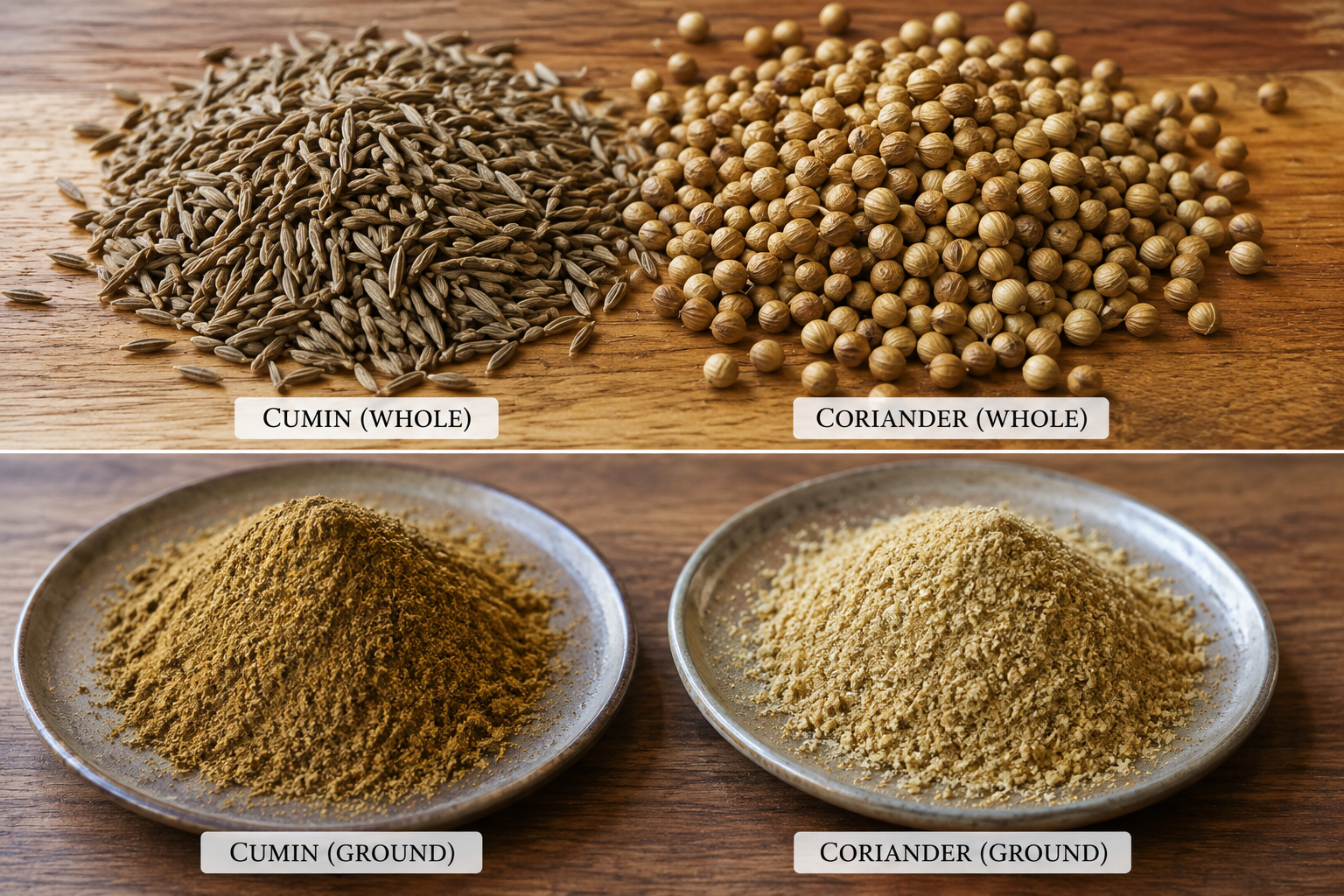
| Whole spice | Long, narrow, brown seeds | Round, pale tan seeds |
| Intensity | Stronger and more dominant | Milder and more delicate |
| Best for | Curries, chili, beans, meat, rice, savory blends | Curries, vegetables, marinades, lentils, baked goods |
| Works well with | Chili, garlic, paprika, coriander | Cumin, cardamom, cinnamon, citrus |
| Direct substitutes? | Not exactly | Not exactly |
Quick answer
Use cumin when you want a deeper, earthier and more savory flavor.
Use coriander when you want a lighter, brighter and more citrusy flavor.
Use both when you want balance between earthy warmth and aromatic freshness.
What Is Cumin?
Cumin is a spice produced from the dried seeds of the Cuminum cyminum plant.
Whole cumin seeds are long, narrow, ridged and usually tan to brown. Ground cumin is generally light to medium brown and has a strong aroma even before cooking.
What does cumin taste like?
Cumin has a distinctive flavor that can be described as:
- earthy;
- warm;
- savory;
- nutty;
- slightly bitter;
- mildly peppery.
It is a relatively powerful spice. A small amount can add considerable depth, while too much may make a dish taste overly earthy or bitter.
Cumin is especially common in savory cooking and is frequently used in curries, chili, bean dishes, rice, meat rubs, marinades and spice blends.
For more detail about the spice itself, see our guide to what cumin is made from.
What Is Coriander?
Coriander spice is made from the dried seeds of the Coriandrum sativum plant.
Whole coriander seeds are round and usually pale tan or yellow-brown. They are larger and much more spherical than cumin seeds.
What does coriander taste like?
Coriander seeds have a flavor that is:
- citrusy;
- lightly sweet;
- floral;
- gently nutty;
- aromatic;
- warm but mild.
Compared with cumin, coriander is softer and less dominant. It can add fragrance and brightness without making a dish taste heavily earthy.
Is coriander the same as cilantro?
They come from the same plant, but the words are used differently depending on where you live.
In American English, cilantro usually refers to the fresh leaves and stems of Coriandrum sativum, while coriander usually refers to the dried seeds.
In other varieties of English, the word coriander may also be used for the fresh leaves.
That naming difference is one reason recipes involving coriander can sometimes be confusing.
What Is the Main Difference Between Cumin and Coriander?
The biggest difference between cumin and coriander is flavor intensity and character.
Cumin is darker, deeper and more savory. It gives food an earthy foundation and pronounced warm-spice flavor.
Coriander is brighter, lighter and more aromatic. Its citrus-like notes can make a dish feel fresher and less heavy.
Think of the difference this way:
Cumin = depth
Coriander = brightness
That contrast is exactly why they work so well together.
Cumin vs Coriander Taste
If you taste the spices side by side, they are difficult to confuse.
Cumin has an earthy, slightly bitter and strongly savory quality. Its flavor tends to remain noticeable even when mixed with several other seasonings.
Coriander is gentler. Its citrusy, lightly sweet character blends more easily into a larger spice mixture.
For example, adding cumin to roasted carrots pushes them toward a deeper, warmer flavor. Adding coriander makes them more fragrant and slightly brighter.
Using both provides a balance of those two effects.
Ground Coriander vs Cumin
Ground cumin and ground coriander can look similar because both are brownish powders, but they smell and taste quite different.
Ground cumin
Ground cumin usually has:
- a darker, earthier aroma;
- stronger savory notes;
- a more dominant flavor;
- a slightly bitter finish.
Ground coriander
Ground coriander usually has:
- a lighter aroma;
- citrus-like notes;
- mild sweetness;
- a softer overall flavor.
If two ground spices have lost their labels, smell is usually more useful than color for distinguishing them.
Cumin normally smells stronger and earthier. Coriander tends to smell lighter, more fragrant and somewhat citrusy.
Do Cumin and Coriander Seeds Look the Same?
No. Whole cumin and coriander are easy to tell apart once you know what to look for.
Cumin seeds are:
- long;
- narrow;
- ridged;
- tan to brown;
- slightly curved.
Coriander seeds are:
- round;
- larger;
- pale tan to yellow-brown;
- bead-like in appearance.
They become much easier to confuse after grinding.
Why Are Cumin and Coriander Used Together?
Cumin and coriander are commonly paired because their flavors fill different roles.
Cumin provides the earthy base.
Coriander provides the aromatic lift.
Together, they create a more balanced seasoning than either spice may provide alone.
The combination is common in many:
- curries;
- lentil dishes;
- chickpea recipes;
- rice dishes;
- marinades;
- meat rubs;
- roasted vegetables;
- Middle Eastern spice mixtures;
- North African spice mixtures;
- South Asian spice blends.
Cumin and coriander also work well alongside spices such as cardamom, cinnamon, paprika, turmeric and black pepper.
For an example of how spices take on different roles inside larger blends, see our Ras el Hanout vs Garam Masala comparison.
Can You Substitute Coriander for Cumin?
Yes, but coriander is not a direct replacement for cumin.
If you substitute coriander for cumin, your dish will generally become:
- less earthy;
- less savory;
- less intense;
- more aromatic;
- more citrusy.
The substitution works best when cumin is only one of several seasonings in the recipe.
If cumin is the dominant flavor, replacing it entirely with coriander will noticeably change the character of the dish.
How much coriander should replace cumin?
A reasonable starting point is about the same amount, then adjust to taste.
Because coriander is usually milder than cumin, the result may still taste less intense.
In some recipes, a spice blend that already contains cumin may provide a closer substitute, although it will also introduce the other spices in that blend.
Can You Substitute Cumin for Coriander?
Yes, but cumin is stronger and earthier than coriander.
If a recipe calls for 1 teaspoon of ground coriander, start with approximately ½ to ¾ teaspoon of cumin, then taste and adjust.
Using cumin instead of coriander will usually make the dish:
- earthier;
- more savory;
- warmer;
- stronger;
- less citrusy.
If coriander’s bright character is important to the recipe, a small amount of lemon zest alongside the cumin can add some of the missing citrus-like freshness.
It will not recreate coriander exactly, but it can provide a better balance than cumin alone.
Cumin vs Coriander Substitution Chart
| Recipe calls for | Possible substitute | Starting amount | What will change? |
|---|---|---|---|
| 1 tsp cumin | 1 tsp coriander | Start 1:1 | Lighter, less earthy, more citrusy |
| 1 tsp coriander | ½–¾ tsp cumin | Start with less | Stronger, earthier, less citrusy |
| Coriander | Cumin + a little lemon zest | Add conservatively | More earthy with added brightness |
| Cumin | Spice blend containing cumin | Check blend ingredients | May be closer, but adds other flavors |
Best rule: substitute these spices only when neither one is the defining flavor of the recipe.
Can You Use Cumin and Coriander Together?
Absolutely.
In many dishes, using both is better than choosing one.
A simple starting ratio is approximately 1:1, especially for marinades, roasted vegetables and homemade spice blends.
From there:
- add more cumin for deeper, earthier flavor;
- add more coriander for a lighter, more aromatic result.
The ideal ratio depends on the dish and the other ingredients.
Which Is Better for Meat?
Cumin is usually the better choice when you want deep, savory flavor.
It pairs particularly well with:
- beef;
- lamb;
- chicken;
- ground meat;
- kebabs;
- burgers;
- meat marinades.
Coriander also works well with meat, but gives it a lighter and more aromatic flavor.
For many meat dishes, combining the two is the most balanced option.
Choose cumin for meat when:
- you want strong savory depth;
- the recipe uses chili, paprika or garlic;
- the meat needs a warmer spice profile.
Choose coriander for meat when:
- you want a lighter aroma;
- the recipe contains citrus;
- you want the seasoning to be less dominant.
Which Is Better for Vegetables?
Both spices work very well with vegetables.
Use cumin with:
- potatoes;
- cauliflower;
- carrots;
- squash;
- chickpeas;
- beans.
It is especially useful when you want vegetables to taste warmer, earthier and more savory.
Use coriander with:
- carrots;
- zucchini;
- cauliflower;
- lentils;
- chickpeas;
- tomatoes.
Coriander is a good choice when you want a more fragrant and slightly fresher flavor.
For roasted vegetables, cumin and coriander together are particularly versatile.
Add paprika, garlic, salt and a little oil and you have the foundation of a simple savory seasoning blend.
Cumin vs Coriander for Common Dishes
| Dish | Better choice | Why |
|---|---|---|
| Chili | Cumin | Adds earthy, savory depth |
| Curry | Both | Cumin adds depth; coriander adds brightness |
| Roasted vegetables | Both | Creates a balanced warm-spice profile |
| Meat rub | Cumin or both | Strong savory character |
| Lentils | Both | Earthiness plus aromatic freshness |
| Chickpeas | Both | Works especially well with garlic and paprika |
| Citrus marinade | Coriander | Complements brighter flavors |
| Rice dishes | Both | Adds complexity without relying on heat |
There is no universal winner. The best spice depends on the flavor you want to create.
Whole vs Ground Cumin and Coriander
Both cumin and coriander are available whole or ground.
Ground spices
Ground spices are convenient for:
- sauces;
- marinades;
- curries;
- dry rubs;
- soups;
- seasoning mixes.
Because they disperse quickly through food, they are easy to use when you want even seasoning.
Whole spices
Whole seeds give you more control over flavor and can be toasted before grinding.
Toasting briefly can intensify their aroma and make freshly ground spices noticeably more fragrant.
Coriander seeds are easy to crush with a mortar and pestle. Cumin seeds can be ground using either a mortar or spice grinder.
For the best flavor, store both whole and ground spices in tightly sealed containers away from:
- direct sunlight;
- heat;
- moisture;
- steam.
Our guide to how to store spices properly explains the best storage setup in more detail.
Can You Toast Cumin and Coriander Together?
Yes.
Toasting cumin and coriander together is a simple way to intensify their aroma before using them in:
- curries;
- rice;
- marinades;
- spice blends;
- roasted vegetables;
- meat rubs.
Place the whole seeds in a dry skillet over medium-low heat.
Stir or shake the pan frequently so the seeds heat evenly.
Remove them when they become noticeably more aromatic.
Do not wait until they begin to smoke. Spices can move from toasted to burnt quickly, and burnt cumin can develop an unpleasant bitter flavor.
Allow the seeds to cool before grinding.
Cumin vs Coriander: Which Should You Choose?
Choose cumin when you want:
- earthy flavor;
- savory depth;
- warm spice notes;
- stronger seasoning;
- a flavor that stands out.
Choose coriander when you want:
- citrus-like brightness;
- gentle sweetness;
- lighter aroma;
- a softer spice profile;
- a flavor that blends easily with other ingredients.
Choose both when you want a balanced combination of warmth and freshness.
The easiest rule to remember
Cumin makes a dish deeper. Coriander makes it brighter.
Frequently Asked Questions
Are cumin and coriander the same spice?
No. Cumin and coriander come from different plants and have distinctly different flavors. Cumin is earthy, warm and savory, while coriander is lighter, more citrusy and mildly sweet.
Do cumin and coriander taste similar?
Not particularly. They share some warm and nutty characteristics, but cumin tastes much earthier and stronger. Coriander has a brighter, more citrus-like flavor.
Which is stronger, cumin or coriander?
Cumin is generally stronger and more dominant. Coriander is milder and blends more easily with other spices.
Is coriander hotter than cumin?
Neither spice is considered hot in the way cayenne or chili flakes are. Cumin can taste warmer and more intense, but it does not create chile-like heat.
Can coriander replace cumin?
Yes in some recipes, but the flavor will change. Coriander produces a lighter, less earthy and more citrusy result.
Can cumin replace coriander?
Yes, but start with less cumin because its flavor is generally stronger. If a recipe calls for 1 teaspoon of coriander, try approximately ½ to ¾ teaspoon of cumin and adjust to taste.
Can you use cumin and coriander together?
Yes. They are commonly paired because cumin provides earthy depth while coriander adds brightness and aroma.
Is coriander the same as cilantro?
They come from the same plant. In American English, cilantro usually refers to the fresh leaves and stems, while coriander usually refers to the dried seeds.
Which is better, cumin or coriander?
Neither is universally better. Cumin is better for deep, earthy flavor; coriander is better for lighter, citrusy flavor. In many dishes, the best choice is to use both.
The Bottom Line
The main difference between cumin and coriander is their flavor.
Cumin is earthy, warm, savory, nutty and slightly bitter. Coriander is lighter, citrusy, mildly sweet and aromatic.
They can sometimes substitute for each other, but they are not direct replacements.
Use cumin when a dish needs deeper savory warmth.
Use coriander when it needs brightness and fragrance.
And when you want both depth and freshness, use cumin and coriander together.