
Baharat vs Ras el Hanout: Flavor, Uses & Substitutions
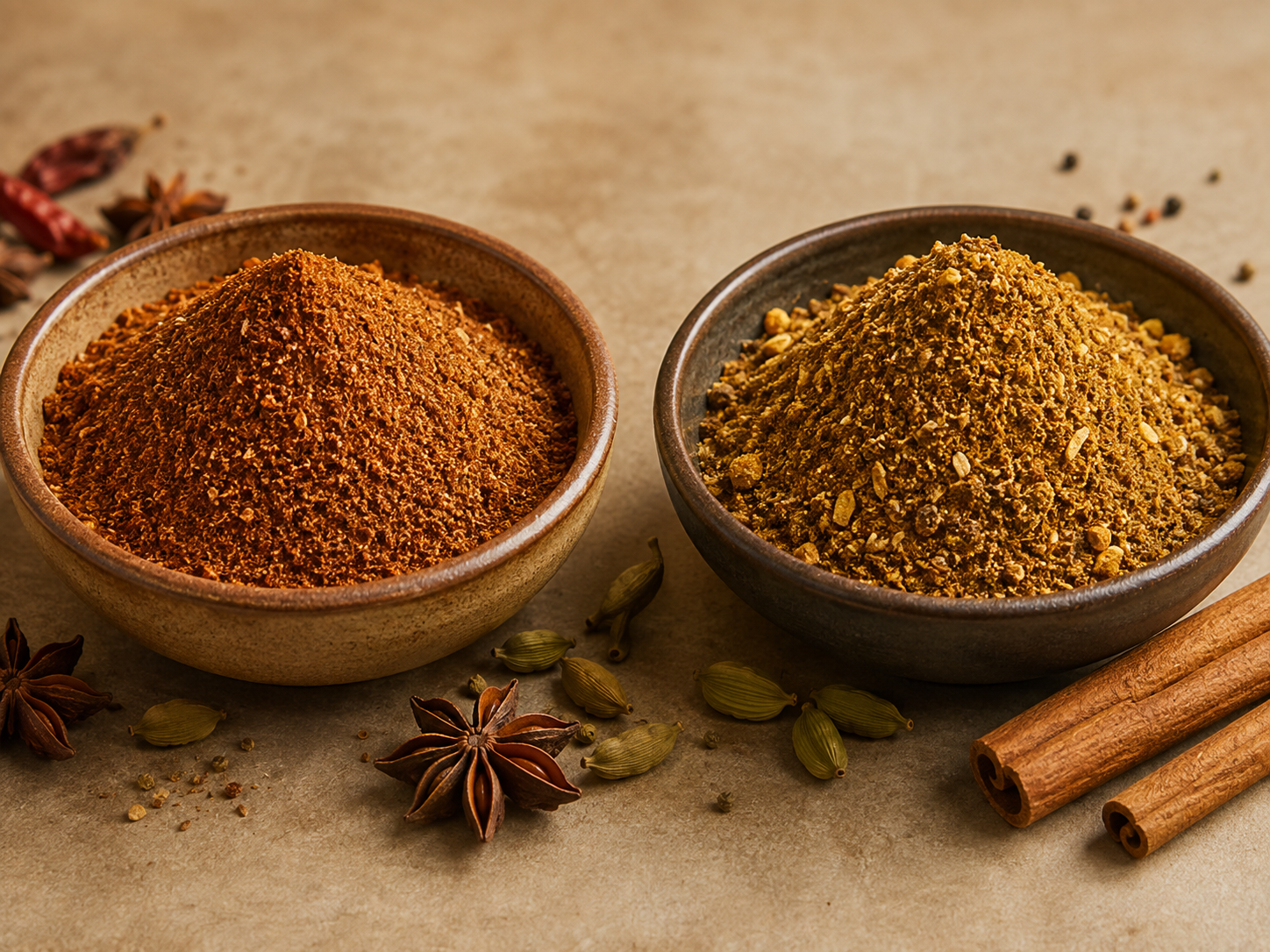
Baharat and Ras el Hanout can share several ingredients, but they are not the same blend. Baharat is commonly associated with Middle Eastern cooking and often has a warm, peppery, savory profile. Ras el Hanout is closely associated with North African cooking, especially Morocco, and can be more complex, fragrant and sometimes floral.
Because neither blend has one universal recipe, the exact difference depends on the two jars in front of you. Still, there are useful patterns.
Baharat vs Ras el Hanout at a glance
| Baharat | Ras el Hanout | |
|---|---|---|
| Regional association | Middle East | North Africa, especially Morocco |
| Typical profile | Warm, peppery, earthy, aromatic | Complex, fragrant, warm, sometimes floral |
| Common base notes | Black pepper, cumin, coriander | Cumin, coriander, ginger, turmeric and other spices may appear |
| Sweet aromatics | Cinnamon, allspice, cloves, cardamom, nutmeg may appear | Cinnamon, cardamom, cloves, nutmeg and other aromatics may appear |
| Best starting uses | Meat, rice, stews, roasted vegetables | Tagines, couscous, lamb, chicken, vegetables |
How Baharat tastes
Baharat is often easy to understand after one smell: peppery, warm and savory, with a gentle sweet-spice background. Cumin and coriander can provide earthiness while black pepper gives the blend a dry bite.
Our full guide to the flavor is here: What Does Baharat Taste Like?
How Ras el Hanout tastes
Ras el Hanout tends to feel more layered. Some blends are earthy and turmeric-forward; others are sweeter, more floral or more aromatic. The number of spices can vary considerably, which is why two brands can taste surprisingly different.
Which one is hotter?
Neither blend has to be hot. Baharat can be peppery, while Ras el Hanout can contain chile in some recipes, but the heat level is product-dependent. If heat matters to you, the ingredient list is more reliable than the name on the front of the jar.
Can Ras el Hanout substitute for Baharat?
Yes, in many savory dishes it can work as an emergency substitute. Use a little less at first because a strongly aromatic Ras el Hanout can dominate a recipe faster than a straightforward Baharat blend.
Expect the finished dish to shift toward a North African flavor profile. It may taste more fragrant, floral or turmeric-forward.
Can Baharat substitute for Ras el Hanout?
Also yes, especially in meat, roasted vegetables, couscous or stew. Baharat will usually give you warmth and savory depth, but it may lack some of the complexity that the original Ras el Hanout was meant to provide.
Which is better for chicken?
Both work. Baharat is excellent when you want a warm, roast-friendly profile. Ras el Hanout is especially good when the chicken is being served with couscous, dried fruit, preserved lemon or a North African-style sauce.
Which is better for lamb?
Again, both. Lamb has enough richness to carry either blend. Baharat keeps the flavor savory and peppery, while Ras el Hanout can add a more perfumed, complex character.
Which is better for rice or couscous?
Baharat is a natural fit for spiced rice. Ras el Hanout feels especially at home in couscous. But there is no rule that prevents crossing them over; the choice is about the flavor direction you want.
Should you own both?
If you regularly cook Middle Eastern and North African food, yes. The overlap makes them convenient substitutes in a pinch, but the differences are large enough to justify keeping both.
Buying tip: read the ingredient list
This comparison is one of the best examples of why buying spice blends by name alone can be misleading. Compare the first few ingredients on the label. If two products have completely different dominant spices, their flavor will differ more than their names suggest.
Frequently asked questions
Is Baharat Moroccan?
Baharat is more broadly associated with Middle Eastern cuisines. Ras el Hanout is the blend more strongly associated with Moroccan and other North African cooking.
Do Baharat and Ras el Hanout contain cinnamon?
They can. Cinnamon appears in many versions of both blends, but it is not guaranteed in every commercial recipe.
Can I mix the two?
You can, but first taste them separately. If both contain strong cloves, cinnamon or cardamom, combining equal amounts may become overly aromatic.
Which is more versatile?
For everyday meat, rice and vegetables, Baharat can feel slightly easier to use. For tagines, couscous and North African-style dishes, Ras el Hanout has the advantage.